Indonesia operator Tour & Travel Service | Call Service 24/7 : +6281-231-280-772 | info@javagoldentour.com

The Beauty Of Tumpak Sewu waterfall

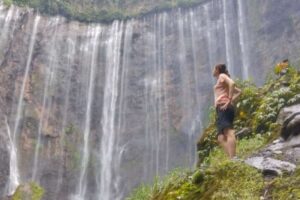
Beauty of Tumpak Sewu Waterfall
Tumpak Sewu Waterfall located in East Java Indonesia, it is a natural wonder that captivates visitors with its stunning beauty. Known as one of the most breathtaking waterfalls in the region, Tumpak Sewu is often referred to as the “thousand streams waterfall” because of the numerous streams cascading down its cliffs, creating a mesmerizing and powerful sight.
A Hidden Gem in the Heart of Nature
Situated in the highlands of Lumajang, Tumpak Sewu is surrounded by lush forests and towering cliffs, making it a perfect destination for nature lovers and adventure seekers alike. The journey to the waterfall itself is an adventure with visitors trekking through a forest path, crossing rivers and navigating rocky terrain. Along the way the verdant landscape offers a glimpse of the rich biodiversity that Indonesia is known for.
Once you arrive, the waterfall comes into view, leaving visitors in awe. Tumpak Sewu is unique in its formation with water from several streams converging and plunging down the rocky cliffs from a height of around 120 meters. The sound of the water hitting the rocks below creates a thunderous roar that can be heard from a distance, amplifying the dramatic impact of the site.

The Spectacular View
The view of Tumpak Sewu is nothing short of magnificent. The waterfall is surrounded by dense tropical vegetation, which creates a perfect contrast with the white and foamy water cascading down. The surrounding cliffs and rocky outcrops enhance the natural beauty of the scene, making it an ideal location for photography and sightseeing.
There are several viewing spots around the waterfall, allowing visitors to appreciate the view from different angles. Some points are perched higher up, offering a panoramic perspective of the entire waterfall, while others are closer to the base, giving an up-close experience of the rushing water. For those daring enough, there’s even a spot where visitors can get beneath the falls for a more thrilling experience, feeling the cool mist and the refreshing spray from the cascading water. you can can make tour in Bromo Ijen Tumpak sewu waterfall with us
A Paradise for Adventurers
For those seeking more than just a visual treat, Tumpak Sewu offers a range of adventurous activities. Hiking to the waterfall can be a challenging but rewarding experience, with the trek taking around 30 to 60 minutes depending on your pace. The path is often slippery due to the mist from the waterfall, so it’s important to wear appropriate footwear for a safe hike.
Additionally, visitors can explore the nearby Tumpak Sewu River which offers opportunities for swimming, river trekking and nature exploration. The surrounding forest area is home to various species of birds, monkeys and other wildlife making it an ideal destination for nature lovers and photographers.
Related post : Bromo Ijen Transport
Best Time to Visit
The best time to visit Tumpak Sewu is during the dry season which typically runs from April to October. During this time the waterfall is at its most powerful with the water flow being particularly strong and the surrounding weather being more favorable for outdoor activities.
However, Tumpak Sewu can also be visited during the rainy season for a different experience. The waterfall’s beauty is ever-changing with the water levels varying depending on the time of year, providing a unique charm during each season. we can make tour in Bromo Ijen tour with reasonable price
Conclusion
Tumpak Sewu Waterfall is undoubtedly one of the most beautiful natural attractions in Indonesia. Its stunning scenery, powerful streams and surrounding natural beauty make it a must-visit destination for those looking to immerse themselves in the splendor of the outdoors. Whether you’re an adventurer a nature enthusiast or simply someone seeking a peaceful escape from everyday life, Tumpak Sewu offers an unforgettable experience in the heart of East Java’s wilderness.